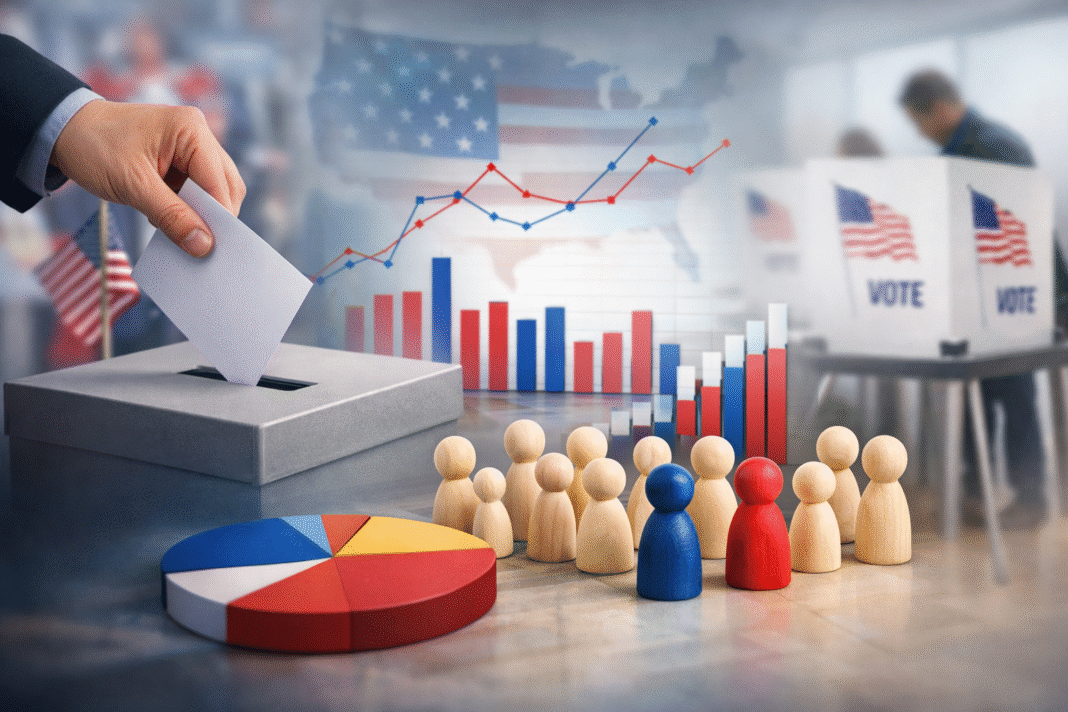

As upcoming elections draw closer, public attention inevitably turns to opinion polls. Headlines highlight who’s ahead, who’s falling behind, and which demographic groups are shifting allegiances. But beneath the surface numbers lies a far more complex story—one shaped by changing voter behavior, evolving polling methods, and growing skepticism toward traditional political forecasting.
Understanding opinion polls and voter trends in upcoming elections requires more than simply reading percentages. It demands context, historical awareness, and a critical eye. This article breaks down how opinion polls work today, what current voter trends reveal, and how reliable these signals truly are in predicting election outcomes.
Why Opinion Polls Still Matter—Despite Their Flaws
Opinion polls have long served as a snapshot of public sentiment. Campaigns rely on them to allocate resources, media outlets use them to frame narratives, and voters often use them—consciously or not—to gauge momentum.
Yet in recent election cycles, polls have faced criticism for “getting it wrong.” In reality, polls rarely fail outright; instead, they are often misunderstood or misused.
What Polls Are Designed to Do
- Measure current voter preferences, not future decisions.
- Identify trends over time, not guaranteed outcomes.
- Highlight demographic and regional shifts.
Polls are most accurate when viewed collectively over time and in combination with other indicators, such as turnout models and voter enthusiasm.
Key Voter Trends Shaping Upcoming Elections
While polling numbers fluctuate daily, several consistent voter trends are emerging across many democratic systems.
1. Rising Number of Undecided and Late-Deciding Voters
One of the most significant trends is the growth of voters who make decisions late or change them entirely.
Why this matters:
- Early polls may underestimate volatility.
- Campaign debates, scandals, or economic shifts can have outsized effects.
- Last-minute turnout drives are increasingly influential.
This trend makes elections less predictable and increases the margin of error in traditional polling models.
2. Generational Shifts in Political Priorities
Younger voters are not only voting differently—they are thinking differently.
Common characteristics include:
- Strong issue-based voting (climate, housing, social justice)
- Lower loyalty to traditional parties
- Greater influence from digital media rather than legacy outlets
Meanwhile, older voters continue to show higher turnout consistency, often prioritizing economic stability and governance experience. Polls that fail to weight generational turnout accurately risk distorted results.
3. Urban–Rural and Education-Based Polarization
Voter trends increasingly align with geography and education level, sometimes more than income or occupation.
- Urban voters lean toward progressive or reformist platforms.
- Rural voters prioritize local economic and cultural concerns.
- Higher levels of education correlate with issue-driven voting rather than party loyalty.
Modern opinion polls now place greater emphasis on education weighting—a lesson learned from past polling inaccuracies.
How Polling Methodology Is Evolving
The way polls are conducted has changed dramatically in response to shifting voter behavior.
From Landlines to Multi-Mode Surveys
Traditional phone surveys alone no longer reflect reality. Today’s polls often combine:
- Mobile phone sampling
- Online panels
- Text-based surveys
Each method has strengths and weaknesses, and blending them helps reduce bias.
Turnout Modeling Is the New Battleground
Accurately predicting who will vote is often more important than knowing how they’ll vote.
Modern polls increasingly incorporate:
- Past voting behavior
- Voter registration data
- Engagement signals (such as event attendance or issue activism)
This shift acknowledges that enthusiasm—not just preference—decides elections.
Interpreting Poll Numbers the Right Way
For readers and voters, understanding opinion polls means moving beyond headlines.
What to Look For
- Trends, not single polls
- Margins of error, especially in close races
- Sample size and demographics
- Consistency across multiple pollsters
A candidate leading by 2% in a poll with a ±3% margin is not truly “ahead”—they’re statistically tied.
The Psychological Impact of Polls on Voters
Opinion polls don’t just reflect public opinion; they can influence it.
Common Effects Include:
- Bandwagon effect: voters supporting perceived frontrunners
- Underdog mobilization: increased turnout among trailing candidates’ supporters
- Voter apathy: belief that outcomes are already decided
Because of this, some analysts argue that polls shape elections almost as much as campaigns themselves.
Can Opinion Polls Predict Election Outcomes?
The honest answer: sometimes—but never perfectly.
Polls perform best when:
- Voter turnout is stable.
- The political environment is calm.
- Demographics closely resemble previous elections.
They struggle when:
- New voter groups emerge.
- Disinformation spreads rapidly
- Major events occur close to election day.
In upcoming elections marked by polarization, economic uncertainty, and fast-moving media cycles, polls should be treated as probability indicators, not crystal balls.
What Voters and Analysts Should Do Moving Forward
Instead of asking whether polls are “right or wrong,” a better question is: What are they telling us beneath the surface?
Smart Ways to Use Polling Data
- Combine polling with historical voting patterns.
- Watch enthusiasm and turnout signals.
- Pay attention to demographic cross-tabs.
- Remain skeptical of dramatic shifts without supporting evidence.
Final Thoughts: Reading Between the Numbers
Opinion polls and voter trends in upcoming elections offer valuable insights—but only to those willing to interpret them carefully. In a rapidly changing political landscape, understanding why voters feel the way they do is just as important as knowing how many support a given candidate.