
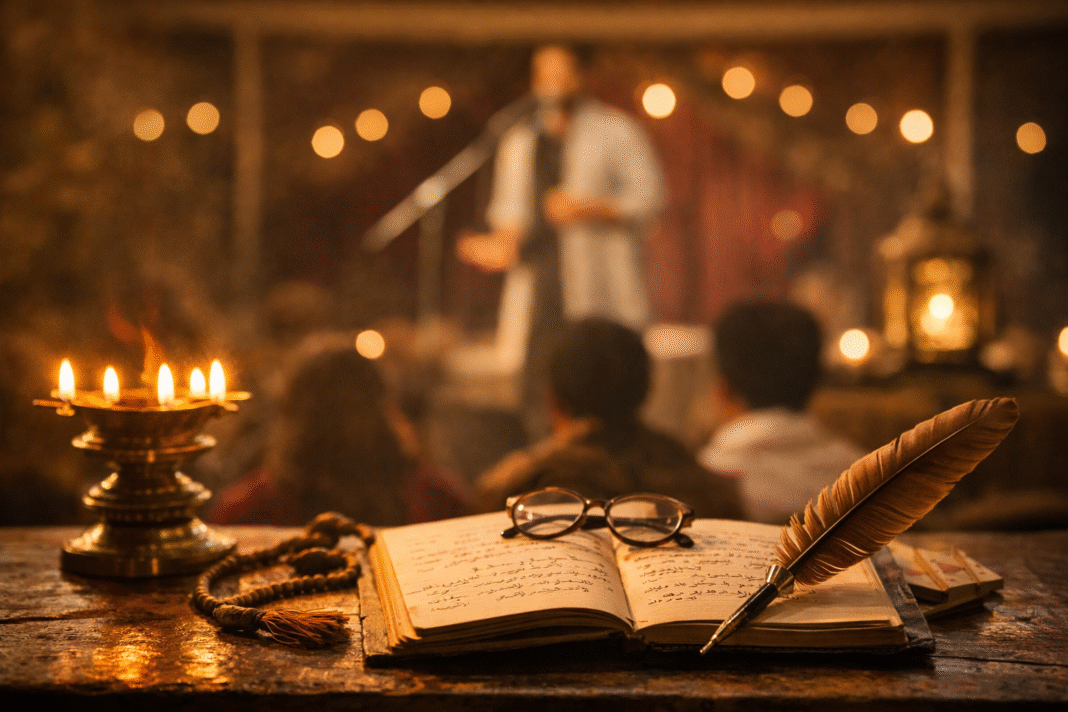

Shayari is not merely poetry—it is emotion shaped into rhythm, history preserved in metaphor, and identity spoken aloud. Across South Asia and beyond, shayari finds its most powerful expression not on printed pages, but on festival stages where voices tremble, crowds fall silent, and words linger long after the final couplet. These cultural festivals transform shayari into a shared experience, making it the heart of celebration rather than a background art.
In this article, we explore cultural festivals where shayari takes center stage, revealing how poetry continues to thrive in public spaces and unites generations and cultures through spoken word.
The Timeless Bond Between Festivals and Shayari
Festivals have always been about storytelling—rituals, songs, performances, and collective memory. Shayari fits naturally into this tradition because it speaks directly to the human condition: love, loss, resistance, devotion, and hope. When performed live, shayari becomes communal rather than personal, turning private feelings into shared understanding.
What makes festival shayari special is not just the poetry itself, but the atmosphere—open-air venues, candlelit evenings, hushed audiences, and spontaneous applause when a verse hits home.
Jashn-e-Rekhta: Reviving Urdu Through Shayari
One of the most prominent cultural festivals where shayari takes center stage is Jashn-e-Rekhta. This event, held in India every year, has been instrumental in reviving interest in Urdu poetry and language.
Renowned poets, emerging shayars, musicians, and scholars gather to celebrate classical and contemporary shayari. The festival blends traditional mushairas with modern formats like spoken word and poetry conversations, making shayari accessible to younger audiences without diluting its depth.
Why it stands out:
- Focus on Urdu preservation.
- Live mushairas with legendary poets
- Youth engagement through contemporary formats
Mushaira Festivals: Where Poetry Becomes Performance
A mushaira is not just an event—it is a cultural ritual. Across India, Pakistan, and diaspora communities worldwide, mushaira festivals are dedicated entirely to shayari.
These gatherings follow a unique structure where poets recite their verses before a live audience, often receiving instant reactions. The pauses, repetitions, and audience responses become part of the performance itself.
Key characteristics:
- Emphasis on oral tradition
- Interactive audience participation
- Celebration of poetic mastery
In these festivals, shayari is not rushed. Each couplet is allowed to breathe, echo, and settle.
Sufi and Literary Festivals: Shayari as Spiritual Expression
Many Sufi and literary festivals place shayari at their emotional core. These festivals explore poetry as a bridge between the earthly and the divine.
Shayari inspired by Sufism often focuses on themes of surrender, love for the divine, and inner awakening. When performed alongside qawwali or soft instrumentation, the impact is deeply moving.
Such festivals remind audiences that shayari is not only entertainment—it is introspection.
Regional Cultural Festivals Celebrating Local Shayars
Beyond large-scale events, countless regional cultural festivals honor local poetic traditions. From small towns to university campuses, these festivals keep grassroots shayari alive.
Local languages and dialects blend with classical forms, proving that shayari evolves without losing its soul. These events often uncover voices that later gain national recognition.
Why they matter:
- Preservation of regional poetic styles
- Platform for emerging poets
- Strong community connection
Modern Spoken Word Festivals: Shayari Meets the New Age
In recent years, spoken word and poetry slam festivals have embraced shayari, especially among younger audiences. These festivals may not always label the content as “shayari,” but its influence is unmistakable—ghazal structures, metaphor-rich language, and emotional delivery.
This modern adaptation proves that cultural festivals where shayari takes center stage are not limited to tradition. Shayari continues to evolve, finding relevance in contemporary struggles and identities.
Why Shayari Thrives at Cultural Festivals
Shayari survives and flourishes at festivals because:
- It demands presence, not distraction.
- It rewards listening, not scrolling.
- It creates connection, not consumption.
In a fast-paced digital world, festivals slow time down. Shayari fills that space with meaning.
The Cultural Impact of Festival Shayari
When shayari is performed at festivals, it does more than entertain:
- It preserves language and heritage.
- It challenges social norms through metaphor.
- It passes emotional wisdom across generations.
These festivals act as living archives, ensuring shayari remains spoken, heard, and felt.
Final Thoughts
Cultural festivals where shayari takes center stage are not relics of the past—they are evolving, breathing spaces where poetry continues to matter. The power of shayari is found in its capacity to bring strangers together via a common emotion, whether in large auditoriums or little courtyards.
As long as festivals exist and people seek words that resonate beyond the surface, shayari will continue to stand in the spotlight—unapologetically human, deeply rooted, and endlessly relevant.