
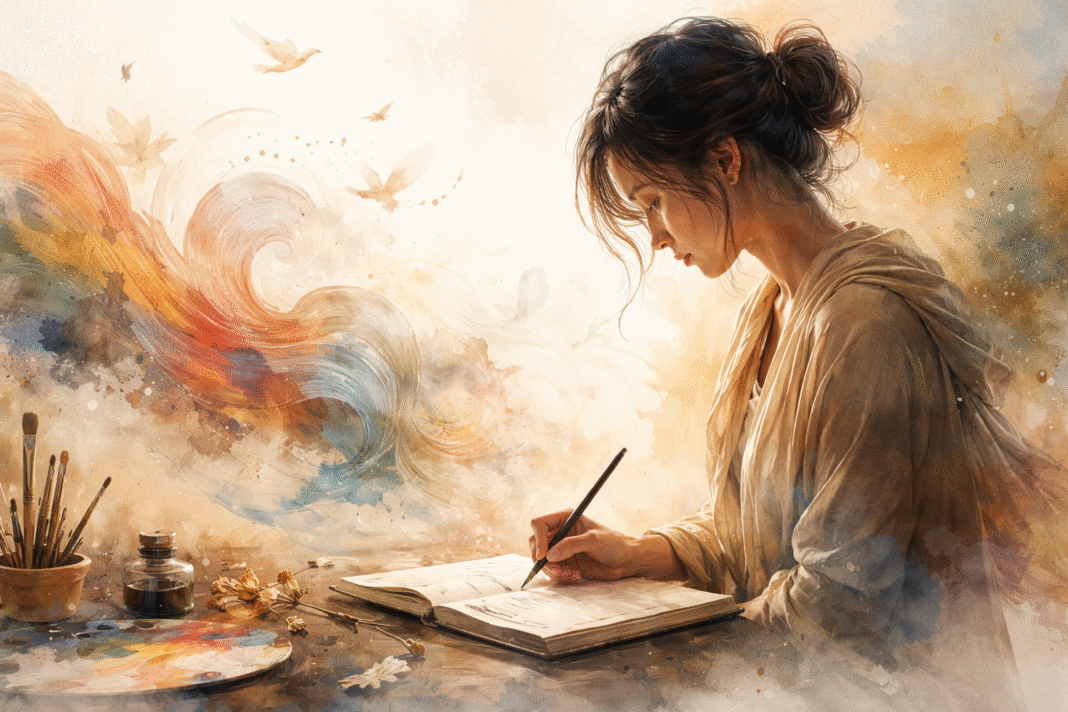

Human emotions are complex, layered, and often difficult to explain in ordinary words. Yet for centuries, people have turned to art and shayari to express what the heart feels when language falls short. From ancient cave paintings to modern digital illustrations, from classical Urdu shayari to contemporary free verse, creative expression has always mirrored humanity’s emotional landscape.
This deep connection between creativity and feeling is not accidental. Art and shayari are born of emotion—and, in turn, they help us understand it.
Let’s explore how art and shayari reflect human emotions, why they feel so personal, and why they remain relevant in every era.
The Emotional Power of Art: When Silence Speaks
Art has an extraordinary ability to communicate without words. A single painting can convey sorrow, hope, rage, or peace—sometimes all at once.
Visual Expression of Inner Feelings
Colors, textures, and forms work together to reflect emotions:
- Dark tones often express grief, fear, or isolation.
- Warm colors symbolize love, passion, or comfort.
- Abstract forms reflect confusion, freedom, or emotional chaos.
- Minimalist art often conveys loneliness or quiet reflection.
Artists frequently channel their personal struggles, joys, and questions into their work. As viewers, we connect because we recognize ourselves in those emotions—even if the story behind the art is different from our own.
Why Art Feels Personal to Everyone
One of the most powerful aspects of art is interpretation. Two people can see the same artwork and feel completely different emotions. This openness makes art deeply human—it adapts to the viewer’s emotional state.
Art doesn’t tell you what to feel.
It allows you to feel what you already carry inside.
Shayari: Poetry That Breathes Emotion
Shayari, especially in Urdu, Hindi, and Persian traditions, is emotion distilled into words. It captures feelings that are often too intense or delicate to say directly.
Shayari as an Emotional Mirror
Shayari reflects a wide spectrum of human emotions:
- Love and longing
- Heartbreak and loss
- Hope, faith, and patience
- Existential pain and self-discovery
A powerful sher (couplet) can hold an entire life experience within just two lines. That emotional density is what makes shayari unforgettable.
Why Shayari Feels So Real
Unlike structured prose, shayari flows like thought itself—fragmented, emotional, honest. It doesn’t try to explain feelings logically. Instead, it lets emotions exist as they are.
That rawness makes readers feel seen.
You don’t just read shayari.
You recognize yourself in it.
The Shared Emotional Language of Art and Shayari
Though one uses visuals and the other words, art and shayari share the same emotional foundation.
Common Emotional Themes
Both forms frequently explore:
- Love that remains unspoken
- Pain that refuses to fade
- Joy that feels fleeting
- Hope that survives against odds
They also thrive in ambiguity, allowing emotions to remain unresolved—just like real life.
Expression Without Judgment
Neither art nor shayari tells us what emotions are right or wrong. They present them honestly. This non-judgmental reflection helps people process feelings they might otherwise suppress.
Healing Through Creative Expression
One of the most profound roles of art and shayari is emotional healing.
Art as Therapy
Psychologists often use art therapy to help individuals express trauma, anxiety, or grief. Creating or viewing art allows emotions to surface safely.
Shayari as Emotional Release
Writing or reading shayari can feel like a conversation with someone who understands your pain. Many people turn to poetry during heartbreak, loneliness, or personal transformation because it offers comfort without solutions—and sometimes, that’s exactly what we need.
Cultural and Historical Reflections of Emotion
Art and shayari also document collective emotions across time.
- War paintings reveal fear, loss, and resistance.
- Romantic poetry reflects societal ideas of love.
- Modern art exposes alienation in fast-paced lives.
Through them, we don’t just learn history—we feel it.
Why Art and Shayari Still Matter Today
In a world dominated by speed, noise, and surface-level communication, art and shayari slow us down. They invite introspection.
Even in the age of social media:
- People share poetry to express emotions they can’t capture
- Visual art becomes a form of silent protest or self-expression.
- Shayari trends because it feels authentic in a filtered world
They remain relevant because human emotions haven’t changed—only the ways we share them have.
Conclusion: The Soul Never Stops Creating
Art and shayari are not luxuries or hobbies. They are emotional necessities. They give shape to feelings that would otherwise remain trapped inside us.
When words fail, art speaks.
When logic collapses, shayari survives.
That is why understanding how art and shayari reflect human emotions is also understanding ourselves—our pain, our love, our fears, and our hope.
As long as humans feel, they will create. And as long as they create, emotions will always find a voice.